Key Takeaways
- A marine survey is a specialized inspection of docks, seawalls, and boat lifts that a standard home inspection does not cover, and it is a separate paid service in a waterfront purchase.
- The seawall is often the single largest financial variable on a canal or Intracoastal property, so the survey should give you an age, a condition rating, and an estimate for repair or replacement.
- Real water access depends on depth and bridge clearance, so you should verify current NOAA charts against your boat’s draft and air draft before you make an offer.
- FWC manatee protection zones can affect where docks are allowed and how you may operate a boat, so confirming the zone for the specific property is a worthwhile early step.
- Order the survey during the due diligence window, before closing, so you can negotiate from the contract rather than react to a surprise after you own the home.
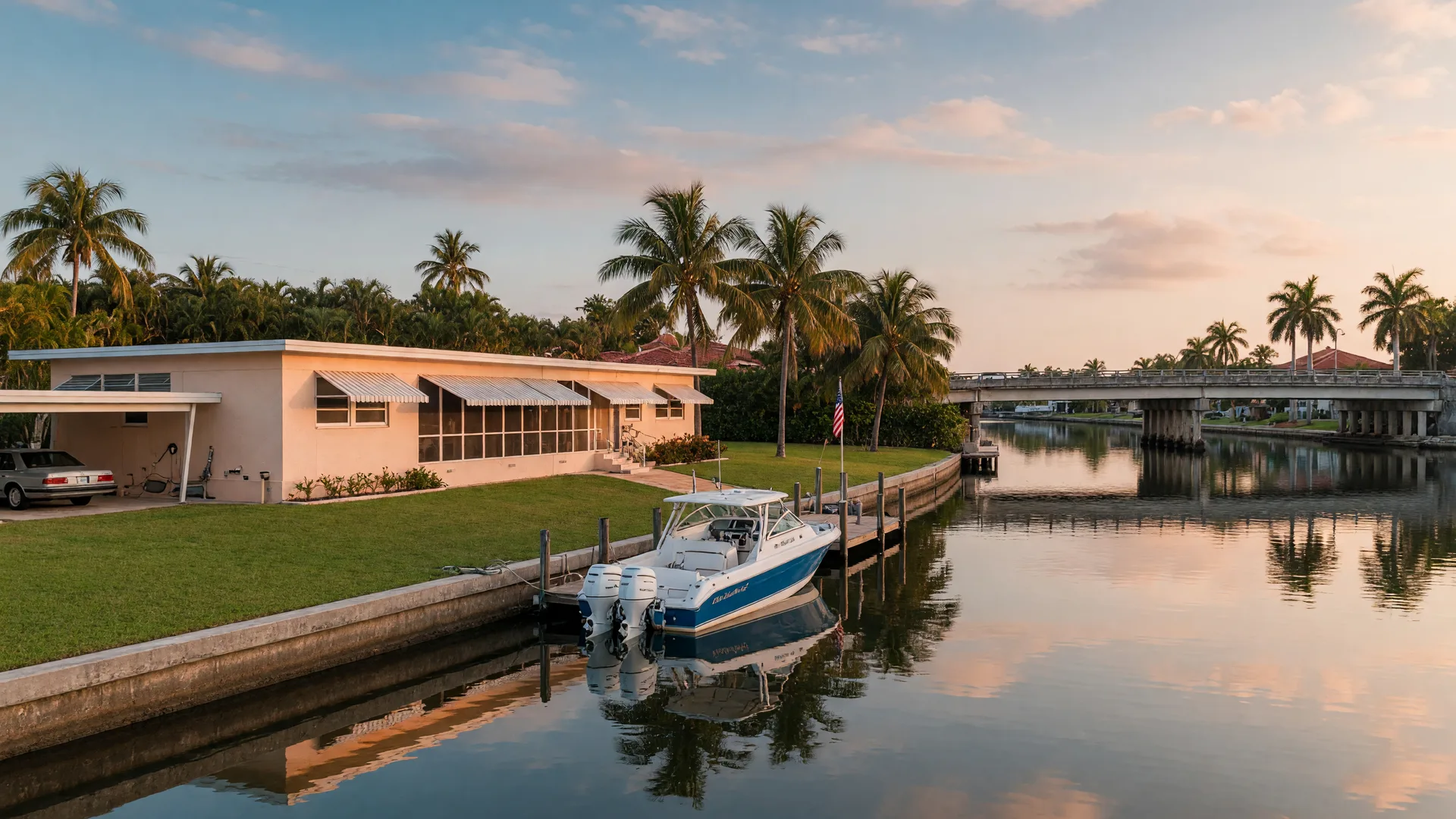
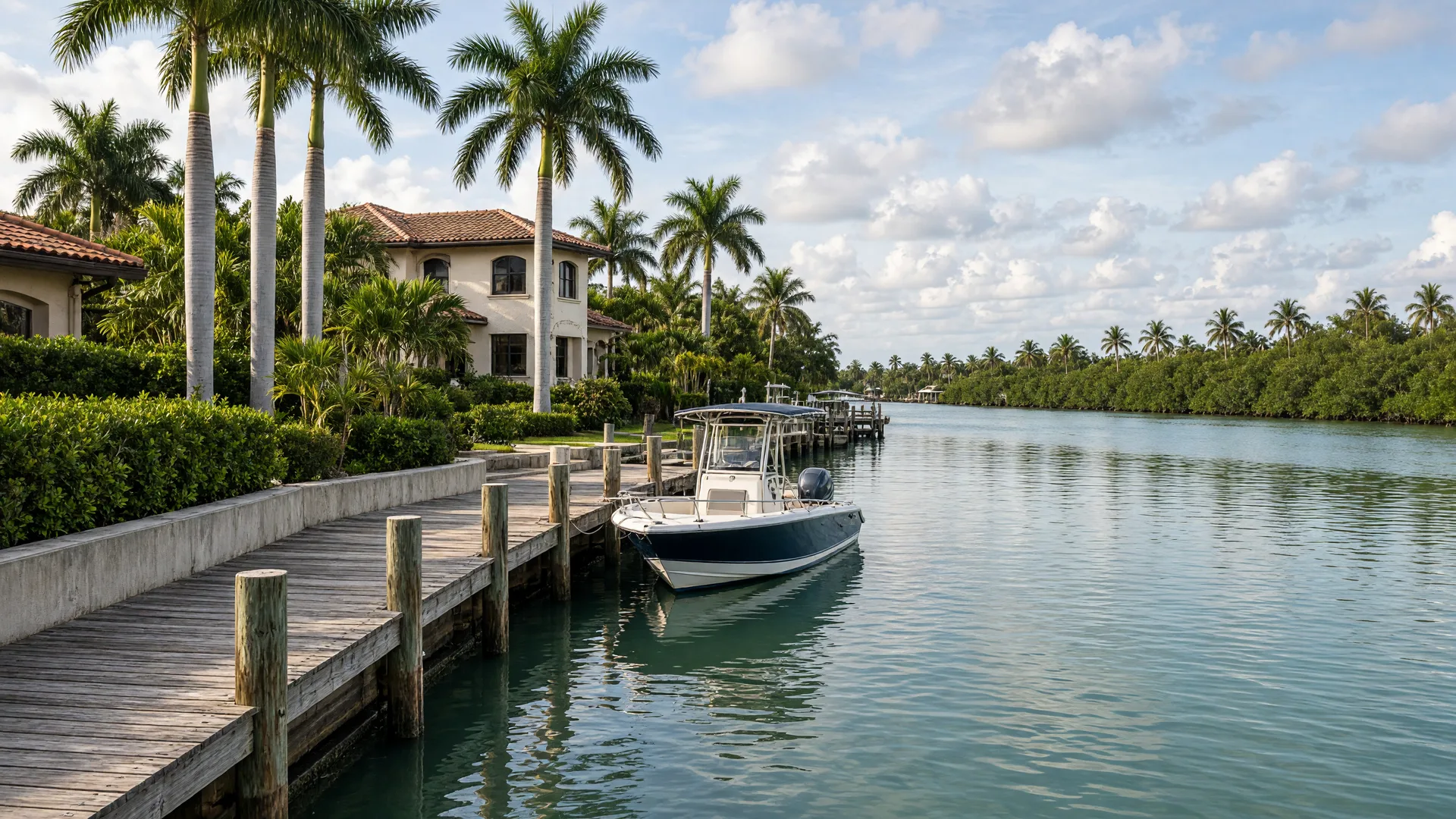
A marine survey is a specialized inspection of the water-related structures that come with a waterfront home, primarily the seawall, dock, pilings, and any boat lift. It is the piece that a standard home inspection does not cover, and it can be the difference between a smooth closing and an expensive surprise. On a Palm Beach County waterfront purchase, a marine survey for waterfront homes tells you what you are actually buying below the waterline.
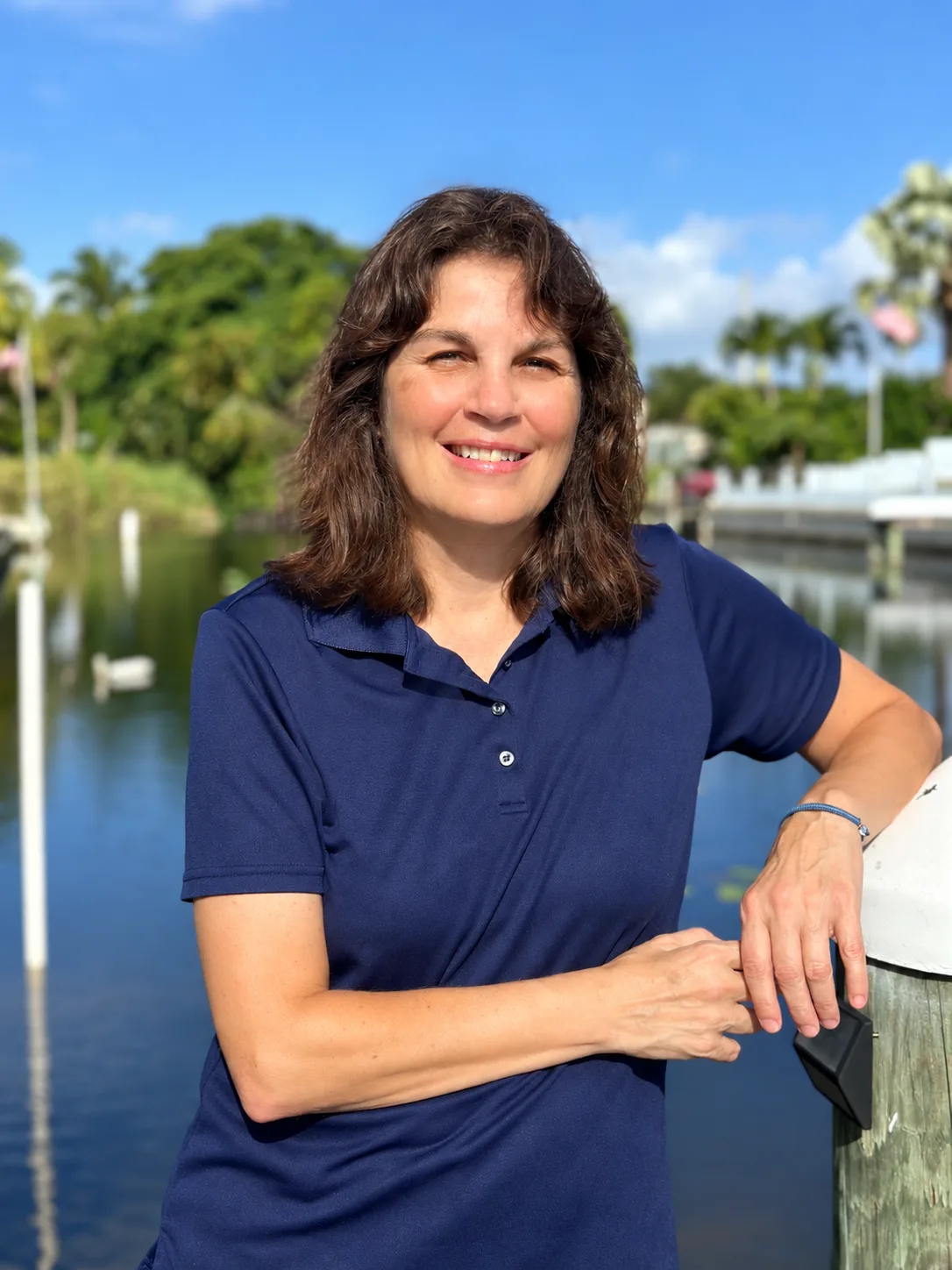
I'm Rhonda Townsend, a REALTOR® with United Realty Group serving West Palm Beach, Wellington, Lake Clarke Shores, Jupiter, and surrounding communities. I work with a lot of waterfront buyers and boaters, so I know that boats, docks, and seawalls raise questions that a normal inspection simply will not answer. This guide explains what a marine survey covers, who performs it, and how to use it as part of your offer.
What Is a Marine Survey and Why Do Waterfront Buyers Need One?
A marine survey is an assessment of the marine structures on a waterfront property. It is a separate, paid service from the home inspection, and it is typically performed by a marine contractor, a marine engineer, or a licensed professional engineer who specializes in marine structures. Waterfront buyers order it because the seawall, dock, and boat equipment are high-value, high-maintenance items that a general home inspector is not trained to evaluate.
The purpose is straightforward: understand the condition of everything that touches the water before you commit, so you know what to maintain, budget for, or negotiate. Think of it as the marine counterpart to your home inspection, answering questions a seller's listing never will.
What Does a Marine Survey Actually Cover?
A thorough marine survey evaluates the waterfront infrastructure that transfers with the sale. That usually includes:
- Seawalls: cracks, spalling, bowing, panel damage, caps, tie-backs, erosion and voids behind the wall, and soil conditions.
- Docks: decking, pilings, hardware, structural connections, and whether permits are in place.
- Boat lifts and davits: cables, wiring, mechanical condition, and safe operation.
- Shoreline and exposed electrical: pumps and electrical equipment exposed to the marine environment, plus shoreline elevation conditions.
A written report typically summarizes findings, rates each component as good, fair, monitor, repair, or critical, and offers an estimated remaining service life. When conditions require it, the survey may include an underwater or dive inspection of pilings and the submerged portions of the seawall.
Who Performs a Marine Survey and When Should You Order It?
Marine surveys are performed by specialists: marine contractors, inspecting engineers, or licensed professional engineers with marine-structure expertise. You will often secure one through the home inspection team, your agent's waterfront referrals, or directly from a marine firm, but the person inspecting your seawall should be distinct from the person who inspects your house.
Order the survey during the due diligence window, before you are committed to closing. The standard Florida residential contracts give buyers an inspection period, and that is the right time to have the marine survey performed so its findings can inform your decision. Waiting until after closing turns a solvable question into an out-of-pocket expense with no leverage. If you are comparing waterfront properties, my guide to canal, lakefront, and Intracoastal waterfront homes can help you narrow down which water type fits your boating and lifestyle goals first.
Why Depth and Bridge Clearance Matter More Than the Listing Says
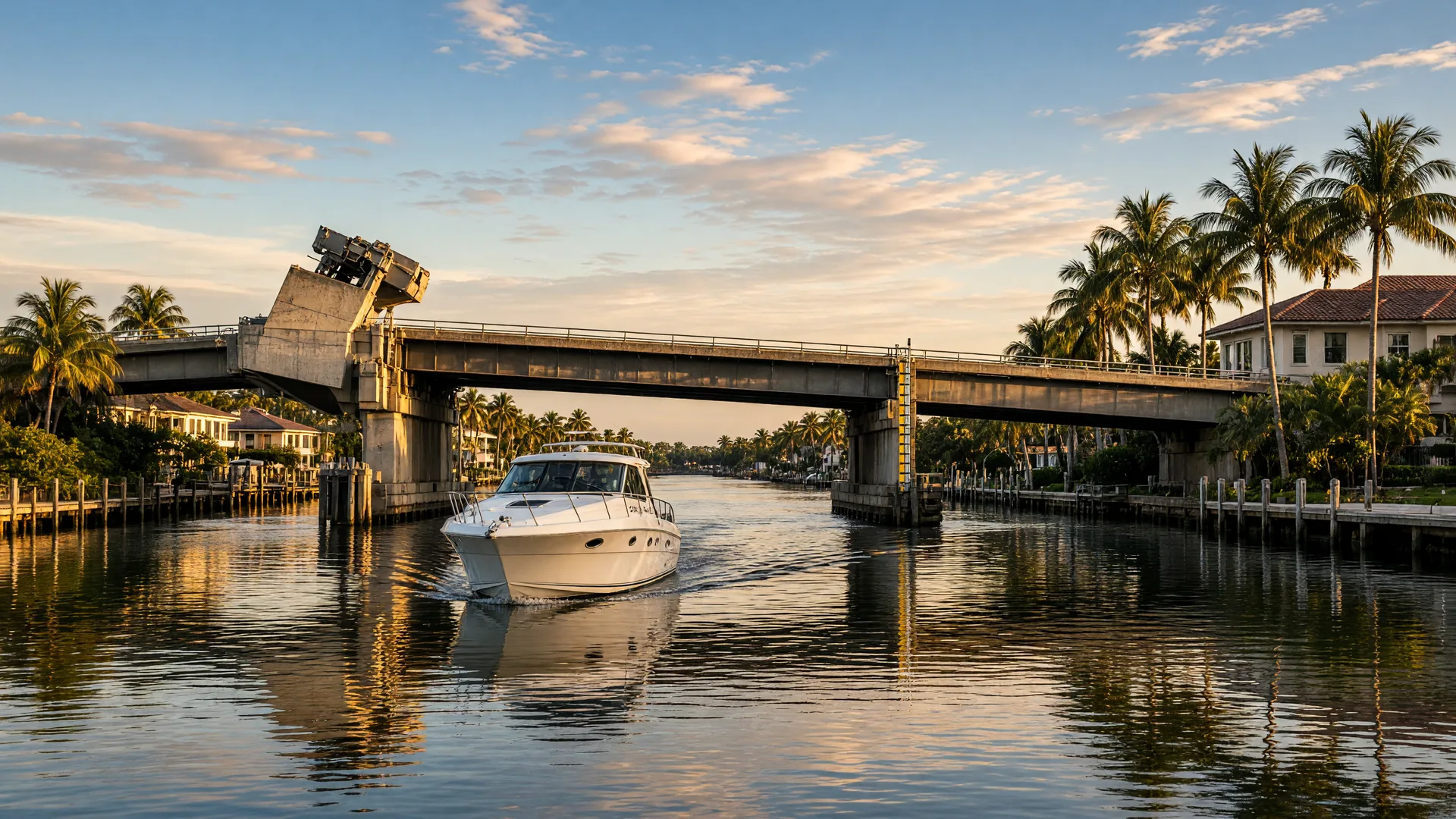
Many waterfront listings say a home has "water access" or "deep water," but the facts you can anchor a decision to come from NOAA. NOAA nautical charts show channel depths, bridge clearances, and navigation routes for most navigable South Florida waterways. Check the charted depth at the dock, ideally confirmed at low tide, against your boat's draft. Then check the air draft of your boat against the lowest fixed bridge between the dock and open water.
If your boat needs to reach the ocean or the Intracoastal, the fixed bridges along the route matter as much as the water at your dock. My fixed bridges and boat clearance guide walks through air draft, drawbridge schedules, and tidal clearance in more detail, and it is one of the most common questions I get from waterfront buyers who boat.
Why the Seawall Is Often the Biggest Financial Question
On a canal or Intracoastal property, the seawall is frequently the single largest financial variable. The buyer typically owns and maintains it, and replacement is priced per linear foot, so a wall that is old, leaning, cracked, or losing soil behind it can be a major line item. A marine survey flags the age, cap height, cracking, lean, rusted tie-backs, and soil loss, and it should give you an estimate for repair or replacement.
Because seawalls should be re-inspected every few years or after a named storm, the survey also gives you a baseline for the property over time. Local requirements for seawall elevation are tightening across South Florida jurisdictions, so confirming the wall's elevation against current local standards is part of a responsible waterfront purchase. My guide to waterfront seawalls, docks, and water access covers the practical details to verify.
How FWC Manatee Protection Zones Affect the Property
Along many of South Florida's waterways, the Florida Fish and Wildlife Conservation Commission establishes manatee protection zones. These set slow-speed or no-wake limits for vessels, and they can affect where a dock may be placed, how it is designed, and whether dredging or other shoreline work is permitted. Because these zones vary by waterway and sometimes by section of a waterway, it is worth confirming the category for the specific property rather than assuming it.
Your marine surveyor, your agent, and your local permitting office can help you understand what the zone means for docking and boating on that particular stretch of water. If boats and docks are central to your plans, communities built around boating access, such as parts of Jupiter, are a common starting point, and my boating communities and dock life in Jupiter post covers what to look for.
How to Make the Survey Part of Your Offer Strategy
The marine survey is most useful when it happens inside your contract's inspection period. If it reveals a failing seawall, dated pilings, or a nonworking lift, you have a clear basis to ask the seller to repair, to credit you, or to adjust the price, exactly as you would with findings from a home inspection. Keeping the survey on the front end preserves that negotiating room.
Waterfront purchases have more moving parts than most, and pairing a marine survey with the right guidance makes a difference. I've walked many buyers through surveys, seawalls, and boating questions from the first appointment through closing, so call (561) 236-9772 or contact me whenever you are considering a waterfront home in Palm Beach County.
Planning a Waterfront Move?
Waterfront purchases come with specialized questions about surveys, seawalls, docks, flood zones, and boating suitability. If you are looking at a waterfront home in Palm Beach County, call (561) 236-9772 or schedule a conversation, and we can talk through what to verify before you offer. No pressure.
Rhonda Townsend, REALTOR® · A.I. Certified Agent™ · United Realty Group
(561) 236-9772 ·
rtownsendrealestate@gmail.com
Frequently Asked Questions
Sources
Sources referenced in this article:
- • NOAA Office of Coast Survey — NOAA nautical charts and navigational data
- • Florida Fish and Wildlife Conservation Commission — FWC manatee protection zones
- • Florida Realtors — Florida Realtors resources for residential transactions
Disclaimer: This article is provided for general educational and real estate information only. Water access, depth, bridge clearance, dockage, flood information, insurance requirements, and boating suitability vary by property and should be independently verified. Consult qualified professionals regarding your individual circumstances.