Key Takeaways
- Lenders require flood insurance for homes in a Special Flood Hazard Area (SFHA) whenever the mortgage is federally backed or regulated, which covers most conventional, FHA, and VA loans.
- NFIP residential coverage is capped at $250,000 for the building and $100,000 for contents, so waterfront buyers in Palm Beach County often pair it with private flood insurance.
- Check the flood map, the elevation certificate, and an actual insurance quote before you make an offer, not after you are under contract.
- V zones carry coastal wave risk and A zones carry still-water flood risk, and the two are rated and priced differently.
- Flood insurance is separate from homeowners insurance, and both belong in the monthly budget for any waterfront home.
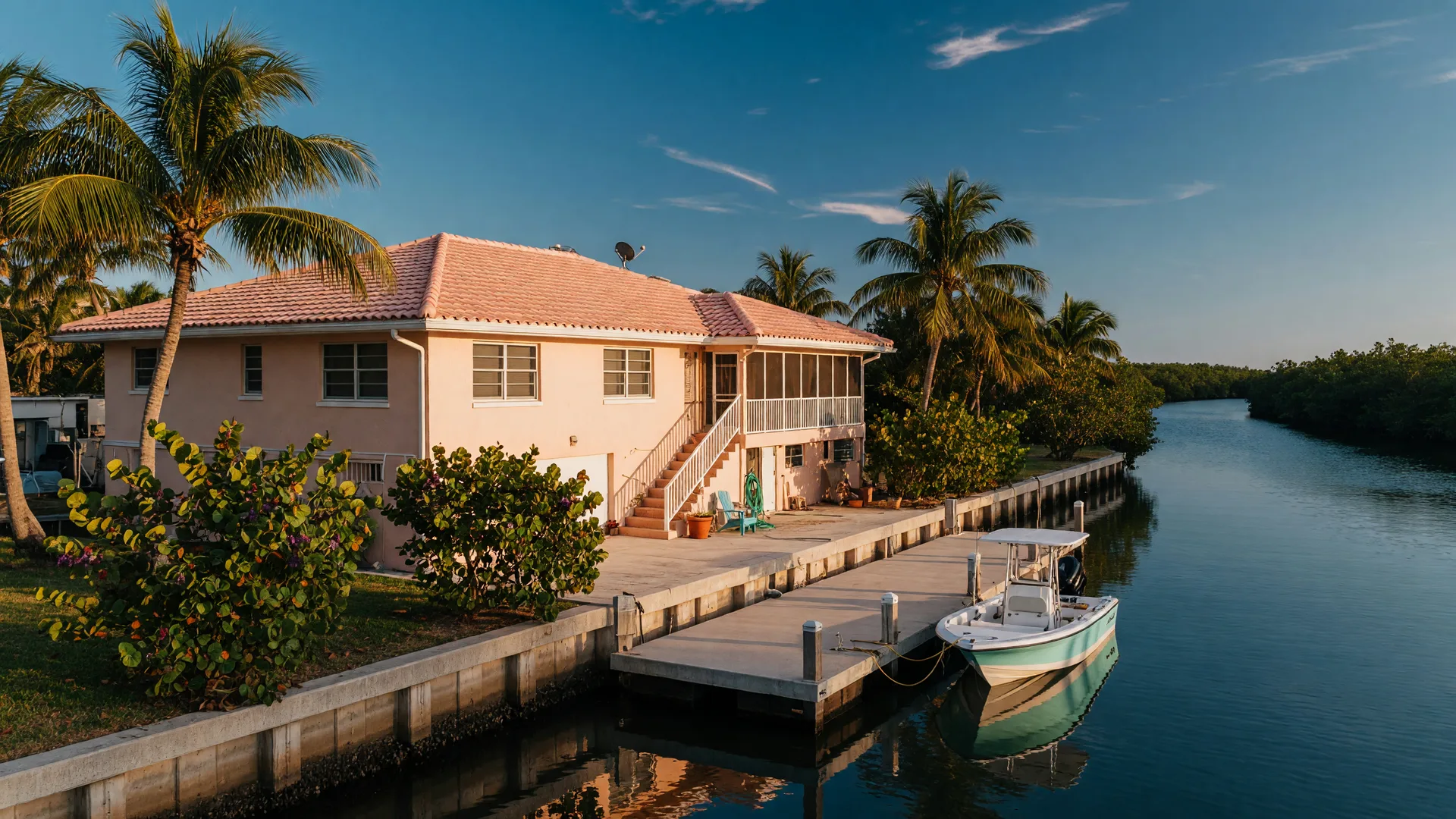
Flood zones and flood insurance affect a waterfront home purchase at every step: they determine what you can finance, how much you pay each month, what you must verify before making an offer, and what you have to prove at closing. In Palm Beach County, a waterfront property in a Special Flood Hazard Area (SFHA) requires flood insurance when the mortgage is federally backed or regulated. This guide walks through how flood zones and insurance shape a waterfront home purchase, and what to check before you commit.
I'm Rhonda Townsend, a REALTOR® with 1st Real Estate Solution Inc. who helps buyers with waterfront homes in West Palm Beach, Lake Clarke Shores, and communities across Palm Beach County. Waterfront buyers often tell me the water is the easy part; the flood zone and insurance questions are what keep them up at night. That is why I like to walk through them early, before the offer, so there are no surprises at closing.
How Do Flood Zones Affect a Waterfront Home Purchase?
A flood zone is a geographic area mapped by FEMA on Flood Insurance Rate Maps (FIRMs) based on its estimated flood risk. The designation that matters most to buyers is the Special Flood Hazard Area, the high-risk zone with a 1-percent annual chance of flooding, commonly called the 100-year floodplain. High-risk designations begin with the letters A or V: A zones are subject to still-water flooding, while V zones are coastal areas with additional wave action and higher velocity water. Moderate-risk areas are typically labeled X (shaded) or B, and low-risk areas carry an unshaded X.
The flood zone is attached to the specific parcel, not the whole neighborhood, so two waterfront homes a few streets apart can sit in different zones. That is why the first step in any waterfront purchase is pulling the property's flood panel from the FEMA flood zone glossary and map resources and confirming the designation with your agent. The zone drives your insurance requirement, your premium, and in some cases what you can build or renovate later, so it belongs at the top of your list, not the bottom.
If you want the full background on what each designation means and how recent map updates have changed things locally, my earlier guide to flood zones and flood insurance in Palm Beach County covers it in detail.
What Do Lenders Require When a Home Is in a Flood Zone?
Under the Flood Disaster Protection Act, anyone buying a home in an SFHA within a participating community must purchase flood insurance as a condition of a federally backed or regulated mortgage. That covers most conventional loans, all FHA and VA loans, and loans sold to Fannie Mae or Freddie Mac, which is most of the market. Your lender will order a flood zone determination early in the process, and if the property comes back in an SFHA, flood insurance becomes a closing condition.
The insurance must be in place before closing, and lenders typically collect the first year's premium at closing and then escrow it with your property taxes. The FEMA mandatory purchase rule also applies to renewals, so the coverage stays with the loan for as long as you own the home. Cash buyers have no lender requirement, but almost all of them insure anyway, because a storm surge or heavy rain event can cause damage that no homeowners policy will cover.
How Much Does Flood Insurance Cost on a Waterfront Home?
The short answer: it depends on the property, and you should get a real quote before you make an offer. Under the National Flood Insurance Program, residential building coverage is capped at $250,000 and contents coverage at $100,000, per the NFIP coverage limits. Because waterfront homes in Palm Beach County frequently sell above that building cap, buyers often layer a private flood policy on top of the NFIP policy to cover the gap.
Premiums are set under FEMA's Risk Rating 2.0, which prices each property on its own characteristics: flood zone, elevation of the lowest floor, distance to water, construction type, and coverage amount. Two similar waterfront homes can carry very different premiums based on elevation alone. My guide to how flood insurance premiums are set explains the rating factors in plain language, and an insurance agent can run a quote with the property's elevation data in minutes.
When you budget a waterfront purchase, treat flood insurance as a monthly line item alongside homeowners insurance, HOA fees, and taxes. The exact number depends on the home, but it is large enough that it should never be an estimate you discover after you are under contract.
What Should You Verify Before You Make an Offer?
Four things, ideally before you write the offer:
- The flood zone: Confirm the property's designation on the current FIRM and note whether it is in an SFHA and whether it is an A or V zone.
- The elevation certificate: If the seller has one, review it. The FEMA elevation certificate records the lowest floor elevation and directly affects your premium. If there is no certificate, plan to have one prepared.
- An insurance quote: Ask an agent to quote flood insurance using the property's details so the monthly cost is a number, not a guess.
- The waterfront systems: Docks, seawalls, and water access have their own condition and permit questions. My guide to seawalls, docks, and water access covers what a marine inspection checks and how to verify permits.
Each of these can change the value of the offer. A home with a current elevation certificate, a well-maintained seawall, and a reasonable insurance quote is worth more than an identical home where those details are unknown, because unknown risk has a price.
What Happens at Closing?
At closing, flood insurance becomes a documented condition of the loan. Your lender will require proof that the policy is active, that the first year's premium is paid, and that the coverage amount meets the lesser of the loan balance or the NFIP maximum. The premium is usually collected at closing and placed in escrow, so expect it on your Closing Disclosure alongside taxes and homeowners insurance.
Buyers sometimes assume flood insurance is bundled into homeowners insurance. It is not. Flood coverage is a separate policy with a separate premium, and standard homeowners policies exclude flood damage. On a waterfront purchase, both policies are part of the transaction, and both should be confirmed before the closing date, not on it.
How Can You Lower Flood Risk and Insurance Costs?
There are practical levers, though results vary by property and none of them are guaranteed. A home built above the base flood elevation usually costs less to insure, which is why the elevation certificate matters. Flood openings, elevated utilities, and other retrofits can reduce risk, and some communities participate in the NFIP Community Rating System, which can earn residents premium discounts. Shopping the private flood insurance market alongside the NFIP can also produce a better combination of coverage and price for higher-value homes.
Before you buy, ask your agent which of these apply to the specific property. And if you are weighing a waterfront purchase now, my waterfront homes guide walks through the full decision, from water access to flood risk, and I am happy to talk through the numbers for a specific home.
If you would like help researching a waterfront property, call me at (561) 236-9772 or email rtownsendrealestate@gmail.com. I can help you understand the flood zone, the insurance picture, and what the waterfront lifestyle really costs before you make an offer.
Planning a Waterfront Move?
I help buyers research flood zone designations, estimate insurance costs, and find waterfront homes that fit their budget and risk tolerance. Tell me what you are considering, and we can walk through the numbers together.
Rhonda Townsend, REALTOR® · A.I. Certified Agent™ · 1st Real Estate Solution Inc.
(561) 236-9772 ·
rtownsendrealestate@gmail.com
Frequently Asked Questions
Sources
Sources referenced in this article:
- • FEMA — Flood Zones Glossary
- • FEMA — Mandatory Purchase Glossary
- • FloodSmart (FEMA NFIP) — NFIP Types of Coverage
- • FEMA — Elevation Certificate Glossary
Disclaimer: This article is provided for general educational and real estate information only. Water access, depth, bridge clearance, dockage, flood information, insurance requirements, and boating suitability vary by property and should be independently verified. Consult qualified professionals regarding your individual circumstances.