Key Takeaways
- Closing costs are the fees and prepaid items you pay at the table beyond your down payment, and they typically add up to a few percent of the purchase price for a financed purchase.
- The Closing Disclosure arrives at least three business days before closing; review it line by line and compare it with your Loan Estimate.
- Wire fraud is the biggest closing-day risk: never follow payment instructions sent by email alone, and always verify wiring details by phone using a number you confirm independently.
- Bring a government-issued photo ID, your proof of homeowners insurance, and your funds in the exact form the closing agent requested, usually a cashier's check or wire.
Closing costs are the fees and prepaid items you pay at the closing table beyond your down payment, and for a financed purchase they typically add up to a few percent of the price. The good news is that none of it has to be a surprise: the numbers are disclosed in advance, and a simple prep checklist keeps you organized. This guide walks through what to do one month out, two weeks out, three days out, and on closing day itself in Palm Beach County.
I'm Rhonda Townsend, a REALTOR® with 1st Real Estate Solution Inc. who helps buyers across West Palm Beach, Wellington, Lake Clarke Shores, and the rest of the county. I have watched buyers breeze through closing and I have watched them scramble, and the difference is almost always preparation. Here is the checklist I share with my buyers.
What Are Closing Costs, and What Do They Cover?
Closing costs are the one-time fees paid when ownership of the home transfers to you. They fall into two broad groups: loan costs, which are fees from your lender and the services tied to getting the mortgage, and other costs, which include title insurance, taxes, recording fees, and prepaid items. In a typical Palm Beach County purchase you will see line items such as:
- Origination charges from the lender, including underwriting and processing fees.
- Appraisal and credit report fees for services the lender requires.
- Title search and title insurance, including the lender's policy and, customarily in Florida, the owner's policy.
- Florida documentary stamp tax on the note and any intangible tax, which vary with the loan amount.
- Recording fees charged by the county to record the deed and mortgage.
- Prepaid items such as homeowners insurance, property taxes, and prepaid interest prorated to the end of the month.
- HOA or condo association fees prorated between you and the seller, where applicable.
My guide to closing costs in Palm Beach County explains each category in detail and how to compare lender quotes. This checklist is about what to do with those numbers once you have them.
One Month Before Closing: Get Organized
The month before closing is for logistics, not surprises. Work through these items early so the final weeks are calm:
- Confirm your cash to close. Add your down payment, closing costs, and any prepaids, and make sure the funds are in the account you plan to use. Avoid large, unexplained deposits, since lenders verify the source of your funds.
- Lock in your homeowners insurance. Florida lenders require an active policy before closing, and waterfront or older homes can take longer to quote. Start the process early and have your policy binder ready.
- Ask your closing agent about payment methods. Confirm whether your cash to close will be wired or paid by cashier's check, how the check should be made out, and where the wire should go. Get these details in writing from the title company's official channels.
- Schedule your final walkthrough for within a day or two of closing, at a time when the home is vacant and accessible.
Two Weeks Before Closing: Verify the Numbers
By now you should have a clear picture of the loan terms from your Loan Estimate. Two weeks out is the time to compare and question:
- Compare the Loan Estimate with any updated quotes. Fees can shift slightly, but significant increases deserve a conversation with your lender.
- Confirm the interest rate and points are locked, and check the rate lock expiration date against your closing date.
- Verify your name and address are spelled exactly as they will appear on the mortgage documents, since corrections at closing are difficult.
- Check the prorations. Property taxes, HOA fees, and other items are split between buyer and seller based on the closing date; your agent or closing agent can explain any line you do not understand.
If anything looks off, ask now rather than at the table. Your lender and title company would far rather answer questions early than reprint documents on closing day.
Three Days Before Closing: Review the Closing Disclosure
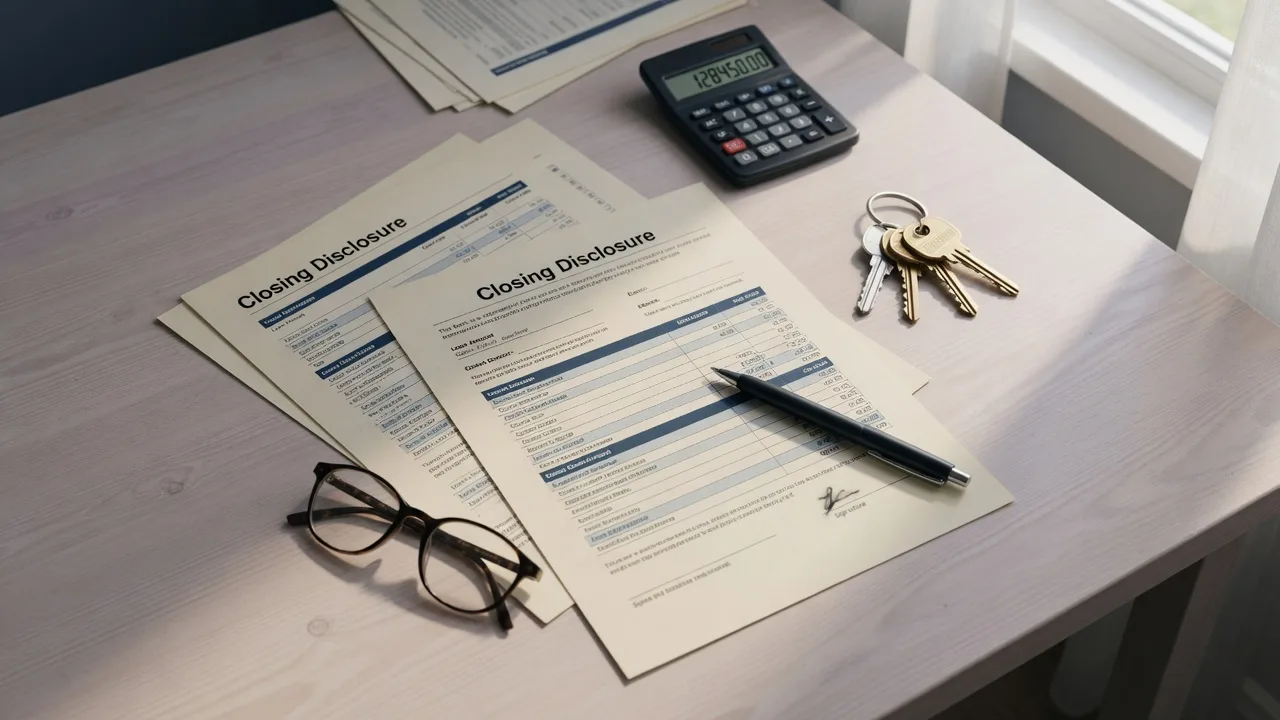
The Closing Disclosure is the final statement of your loan terms and closing costs, and federal rules require your lender to deliver it at least three business days before closing. This is the document that matters most, and the Consumer Financial Protection Bureau's Closing Disclosure explainer walks through every page. For a deeper look at the form itself, my guide to understanding the Closing Disclosure reads each page with you. Review it line by line:
- Loan terms: Amount, interest rate, monthly payment, and whether the loan has a prepayment penalty or balloon payment.
- Projected payments: Principal and interest, mortgage insurance, and escrow for taxes and insurance.
- Closing costs: Compare each line with your Loan Estimate, and flag anything that changed by more than a small amount.
- Cash to close: The final total you must bring, and how it compares with your earlier estimate.
The CFPB also publishes a mortgage closing checklist that is worth printing and following in the final days. If the Closing Disclosure arrives late, your closing may be delayed by law, so confirm delivery with your lender early in the week.
Closing Day: What to Bring and What to Expect
On closing day, bring the essentials and expect a signing session of roughly an hour. Your checklist:
- Government-issued photo ID. A driver's license or passport, current and unexpired.
- Your funds in the exact form the closing agent requested, wired ahead or a cashier's check made out correctly.
- Proof of homeowners insurance and the policy binder if the lender has not already received it.
- Your Closing Disclosure and any questions you noted while reviewing it.
- Complete the final walkthrough before signing, confirming the home is in the agreed condition and the seller has completed the required repairs.
At the table you will sign the mortgage note, the deed, and a stack of closing documents, and the closing agent will walk you through each one. After recording, the keys are yours. My step-by-step closing day guide covers exactly what happens in the room and after you leave.
Wire Fraud Protection: The Rule That Matters Most
The single biggest risk in the closing process is wire fraud, and it targets buyers precisely because the amounts are large and the timing is tight. The pattern is always similar: an email that looks like it comes from your title company or closing agent, arriving at the last minute, with "updated" wiring instructions. The Florida Realtors and the CFPB both warn buyers about this exact scheme. The rules that protect you:
- Never follow wiring instructions sent by email alone. Not even an email that looks identical to a real one from your title company.
- Verify by phone using a number you confirm independently. Look up the title company's phone number on its official website or in your contract, not in the email.
- Treat any last-minute change as a red flag. Legitimate closing agents do not change bank details at the last minute.
- Confirm with two trusted contacts. The CFPB recommends identifying two people involved in your closing and confirming the wiring procedure with them before you send anything.
If you ever suspect a scam, contact your bank immediately and report it to the FBI's Internet Crime Complaint Center, because wire transfers move fast and every hour matters.
Closing costs are one of the last big numbers in your home purchase, and a little organization makes them painless. If you are buying in Palm Beach County and want someone to walk you through the process from pre-approval to keys, call me at (561) 236-9772 or email rtownsendrealestate@gmail.com. I would be glad to help you plan the whole picture, and the Palm Beach County home buying guide covers the full journey step by step.
Ready to Talk About Your Next Move?
Closing costs should never be a surprise. Tell me what you are planning, and I can help you map the full picture: price range, down payment, closing costs, and a realistic timeline for your Palm Beach County purchase.
Rhonda Townsend, REALTOR® · A.I. Certified Agent™ · 1st Real Estate Solution Inc.
(561) 236-9772 ·
rtownsendrealestate@gmail.com
Frequently Asked Questions
Sources
Sources referenced in this article:
- • Consumer Financial Protection Bureau — Closing Disclosure Explainer
- • Consumer Financial Protection Bureau — Your Mortgage Closing Checklist (PDF)
- • Florida Realtors — Florida Real Estate Transaction Resources
Disclaimer: This article is provided for general educational and real estate information only. It is not legal, tax, financial, insurance, environmental, engineering, or property-inspection advice. Real estate requirements, costs, risks, policies, and market conditions vary by property and may change. Consult qualified professionals regarding your individual circumstances.