Key Takeaways
- Selling and buying at the same time works best with a written coordination plan that sets firm dates for listing, offers, inspections, and closing before you start.
- Decide your order first: contingent offers, a gap in occupancy, or bridge-style financing each solve the timing problem differently, and the right choice depends on your equity and market.
- Get your financing and documentation ready early so your offer on the next home can compete confidently once your current home sells.
- Contingencies such as a sale-of-home clause protect you, but they also make your offer less attractive, so your agent should help you balance protection with competitiveness.
- Line up moving, storage, and a personal deadline cushion well before the target closing dates, because two closings rarely land exactly on the same day.
You can absolutely sell and buy at the same time in Palm Beach County, and the way to keep stress low is a written coordination plan with firm dates. The plan has six threads: pricing and preparing your current home, getting your financing ready, choosing the right order of transactions, negotiating the contingencies that protect you, coordinating the two closing dates, and arranging moving logistics. Work through the checklist below and most of the classic problems eliminate themselves before they appear.
I'm Rhonda Townsend with 1st Real Estate Solution Inc., and coordinating a sale and a purchase is one of the services my clients rely on most, whether they are moving up, downsizing, or relocating within the county. This checklist complements my deeper guide to selling and buying at the same time, and the moving up page explains how equity and timing fit together. This article is general information, not legal, tax, or lending advice.
Why Is Selling and Buying at the Same Time So Common?
The biggest reason is that almost everyone buying a next home already owns one. Life changes, growing space needs, downsizing, or a job relocation all create the same situation: you need the proceeds of your current home to buy the next one, and you cannot easily afford to carry two mortgages while you search. The market in Palm Beach County moves quickly in places such as West Palm Beach, Wellington, and Lake Clarke Shores, so buyers want to act when the right home appears, not after they have already sold and moved out.
The practical result is a timing puzzle. Every solution to that puzzle is a variation on three themes, which I cover in detail in my sell and buy guide: sell first, buy first, or close both around the same time. The checklist below assumes you have chosen a direction and focuses on making it happen without dropped balls.
What Order Should You Go In: Sell First or Buy First?
Each order has a clear trade-off, and your answer shapes everything that follows.
- Sell first: You have proceeds in hand, a clean offer with fewer contingencies, and maximum flexibility on the next home. The trade-off is that you may need temporary housing between closings while you search.
- Buy first: You move directly from one home to the next with no gap, but you carry two obligations until the sale closes, and your offer may rely on bridge-style financing or your available cash.
- Close near each other: The ideal for many people, because you avoid double payments and a housing gap. It is also the most date-sensitive option, which is why the coordination plan exists.
In a balanced market with realistic pricing, sellers often get to choose this order instead of having the market dictate it. A current comparative market analysis for your current home tells you how quickly it is likely to sell, which is the single best input for choosing your order.
What Should You Have Ready Before You List?
The preparation work is the same as any strong listing, but the stakes are higher because a fast sale protects your purchase timeline.
- Price it to sell based on real data: A CMA built for your neighborhood, not a hopeful number. Overpricing is the most common way a two-transaction plan slips its dates.
- Prepare the home before the sign goes up: Declutter, deep clean, address the repairs buyers will flag. My home preparation guide gives the full room-by-room list.
- Know your costs and net proceeds: Subtract commission, title, taxes, and concessions from your expected sale price so your budget for the next home is real. The cost of selling guide walks through every line.
- Confirm your timeline: Decide your ideal closing month before listing, and communicate it so the sale contract serves your purchase plan.
How Do You Get Financing Ready for Two Transactions?
Financing is where coordination plans live or die, so start early and talk to a lender before you interview listing agents. You need to know how much you can qualify for with and without the current home sold, what your equity can contribute, and which financing path matches your chosen order.
Common approaches include closing the sale first and using the proceeds, making a larger offer contingent on the sale, or using a bridge-style arrangement that funds the new purchase with a short-term loan repaid when your home sells. Each has different costs and risks, and the Consumer Financial Protection Bureau publishes plain-language guidance on mortgages and closing that is a good general reference. Your lender controls the exact options, so get the numbers before committing to an order.
Whatever path you choose, gather your documents early: tax returns, pay stubs, bank statements, and asset records. A fully documented, pre-approved buyer writes a far more competitive offer, which matters when two transactions are on the line.
Which Contingencies Protect You?
If your purchase depends on the sale of your current home, a sale-of-home contingency is your primary protection. It allows you to cancel the purchase and recover your deposit if your home does not sell within an agreed window. The trade-off is real: sellers often prefer offers without it, so your agent may suggest strengthening the offer elsewhere, with a larger deposit, a shorter contingency window, or proof that your home is already under contract.
You will also likely want inspection, financing, and appraisal contingencies on the purchase, and sellers may want a financing contingency or shorter inspection window on your sale. My guide to real estate contingencies explains how each clause works, and your attorney or agent will draft the exact language. Never let a contingency deadline lapse while you are distracted by the other transaction; mark every date on one calendar.
How Do You Line Up the Closing Dates?
Work backward from the purchase closing date and give yourself room. Every step of the purchase, mortgage commitment, inspection, appraisal, and final approval must complete before that date, and each one can slip. Then set the sale closing to land before the purchase, ideally with a cushion.
When the gap between the two closings is short, your listing agent and closing agents coordinate the calendar. When a gap is unavoidable, a few days of temporary housing or a rental solves it. If you prefer to stay in your home after closing instead, a rent-back agreement, where you rent the home back from the buyer for a set period, can cover the gap cleanly; my guide to rent-back agreements for Palm Beach County sellers explains how the terms, rent, and move-out date work. And on closing day itself, understand where the money flows: your sale proceeds, the documentary stamp taxes on the deed, prorated taxes, and your purchase funds all settle at the tables. My closing day walkthrough explains the sequence for both sides, and the closing checklist core page lays out the documents and tasks.
What About Moving and Temporary Housing?
Moving between two homes is logistics, not luck. Decide early whether you can move directly from one closing to the next or need a storage unit and a short stay in between. Book movers as soon as both dates are firm, because moving companies book up, especially at month end when closings cluster.
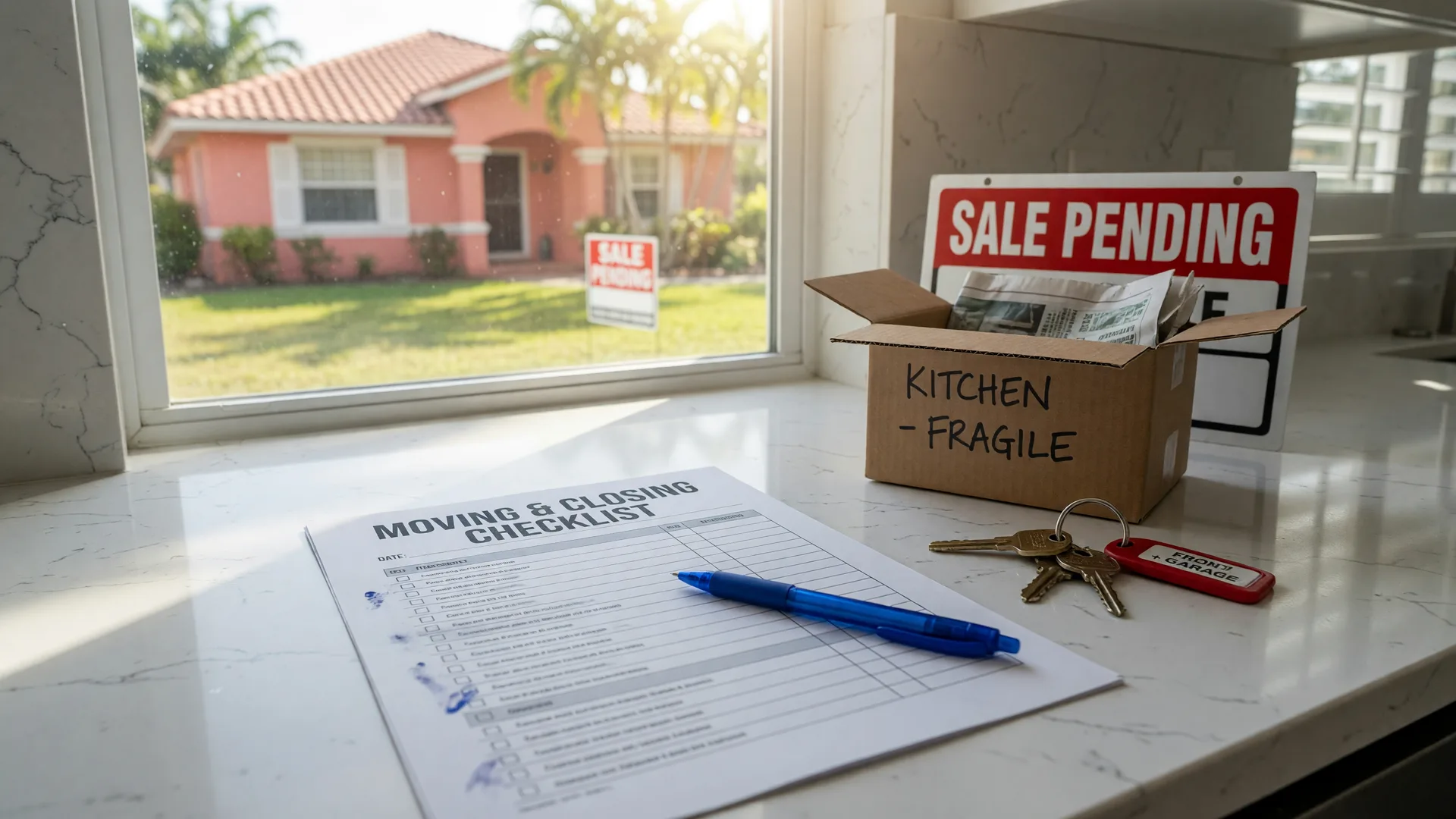
If you are downsizing, this is the moment to declutter in stages rather than moving everything twice. My moving checklist covers the full eight-week sequence, from utilities and address changes to packing room by room. Keep one packed "open first" box per person so a day of overlap between moves still runs smoothly.
Your Selling and Buying Coordination Checklist
Here is the whole plan on one page. Print it, share it with your agent, and check it off as you go.
- Meet with a lender: Get your numbers for both scenarios: sell first, buy first, and simultaneous.
- Get a current CMA for your home and choose your pricing strategy and target timeline.
- Prepare the home for showings before the listing goes live.
- Decide your order and tell your agent and lender so contracts serve the plan.
- Negotiate the right contingencies on both the sale and the purchase, and put every date on one calendar.
- Start your home search in the communities you want, from West Palm Beach to Wellington, so you are ready to move when your home sells.
- Line up movers, storage, and any temporary housing as soon as both dates are firm.
- Confirm every closing date with both closing agents a week out, and verify wire instructions in person by phone.
- Build in a cushion: Even the best plan can slip by a day or two, so schedule nothing critical the week after either closing.
That last line is the honest secret to two-transaction moves: build in margin and you will rarely need it. If you are ready to plan a sell and a buy together, reach out and we can map your dates, review your contingencies, and keep the whole process moving in one direction. I work with buyers and sellers across Palm Beach County, and I am happy to help you compare communities and timelines with no pressure.
Ready to Coordinate Two Moves?
Selling and buying at the same time is completely manageable with a clear plan, and that plan starts with a conversation. Tell me your timeline and your goals, and I will help you map the dates, the contingencies, and the moving pieces with no pressure.
Rhonda Townsend, REALTOR® · A.I. Certified Agent™ · 1st Real Estate Solution Inc.
(561) 236-9772 ·
rtownsendrealestate@gmail.com
Frequently Asked Questions
Sources
Sources referenced in this article:
- • Florida Realtors — Industry Standards and Contract Resources
- • Florida Department of Revenue — Documentary Stamp Tax on Deeds
- • Consumer Financial Protection Bureau — Owning a Home: Closing and Escrow Guidance
Disclaimer: This article is provided for general educational and real estate information only. It is not legal, tax, financial, insurance, environmental, engineering, or property-inspection advice. Real estate requirements, costs, risks, policies, and market conditions vary by property and may change. Consult qualified professionals regarding your individual circumstances.