Key Takeaways
- Native plants are naturally adapted to South Florida's climate, sandy soils, and seasonal rain, so established natives generally need less water, fertilizer, and maintenance than many non-native ornamentals.
- Reliable South Florida natives include coontie, firebush, cocoplum, sea grape, Simpson's stopper, wild coffee, beautyberry, muhly grass, and the sabal palm.
- A native planting plan starts with the right plant for the site: sun exposure, soil drainage, and available space all matter.
- Practical, tidy landscaping with low water needs is rarely a negative at resale, and many buyers value a yard that looks good without constant irrigation.
- Visit real places to see natives in person, including Mounts Botanical Garden in West Palm Beach and UF/IFAS demonstration gardens, before you commit to a plan.
Gardening with native plants is one of the simplest ways to lower outdoor water use in South Florida and give local wildlife food and shelter at the same time. In Palm Beach County, native species are naturally adapted to the climate, sandy soils, and seasonal rain, so they generally need less irrigation, fertilizer, and maintenance once established than many non-native ornamentals. This guide covers which plants do well here, how to start, and how a thoughtful native yard can support your home's appeal when the time comes to sell.
I'm Rhonda Townsend, a REALTOR® with 1st Real Estate Solution Inc. who lives and works in Palm Beach County, serving buyers and sellers from Royal Palm Beach to West Palm Beach and Lake Clarke Shores. Yards come up in nearly every home conversation, so here is the practical side of native gardening for homeowners and buyers, grounded in what local gardeners and extension experts actually recommend.
Why Grow Native Plants in South Florida?
Native plants are species that occur naturally in this region without human introduction. Because they evolved here, they are suited to the heat, the sandy and often alkaline soils, the rainy summers, and the drier winters. For a homeowner the payoff is practical: established native plantings typically tolerate drought, resist local pests, and survive without a constant schedule of fertilizer, spraying, and replanting.
There is also a wildlife angle. Natives provide nectar, seeds, and larval host plants for butterflies, bees, and birds that depend on them. Coontie, for example, is the only host plant for the atala hairstreak butterfly, and firebush draws hummingbirds and butterflies through much of the year. A yard full of adapted plants supports that web of wildlife without you having to maintain a garden that fights the climate.
What Counts as a Native Plant?
"Native" can be defined at a few scales. A plant native to Florida as a whole, to South Florida, or specifically to Palm Beach County may all be described as native, so it is worth asking what the nursery means by the label. Some widely sold "Florida-friendly" plants are not native at all, which is fine, but the term means something specific. The Florida Native Plant Society maintains native plant lists and chapters that can help you confirm what belongs here.
One caution: a few aggressively spreading species are marketed for easy landscaping and are not a good fit for a manageable yard. Confirm a plant's growth habit and mature size before planting, and ask your county extension office if you are unsure about anything that spreads quickly. The goal is a garden that stays where you put it.
How Much Less Water and Maintenance Do Native Plants Need?
No plant is maintenance-free, and anything newly planted needs consistent water while it establishes roots, which in South Florida usually means the first year. After that, most natives tolerate the region's natural dry spells and need far less supplemental irrigation than turf grass and thirsty exotics. That translates into a lower water bill during the dry season and less time dragging hoses around the yard.
Maintenance also shifts in kind rather than disappearing. Mowing shrinks if you convert lawn to planted beds, but pruning, mulching, and occasional cleanup still happen. Grouping plants by their water needs, using a few inches of mulch, and splitting turf from beds makes the whole property easier to care for. The UF/IFAS Florida-Friendly Landscaping program publishes straightforward guidance on right-plant-right-place planning, watering, mulch, and fertilizer that Palm Beach County homeowners can follow directly.
Which Native Plants Thrive in Palm Beach County Yards?
These species are proven performers in this area and cover most yard situations:
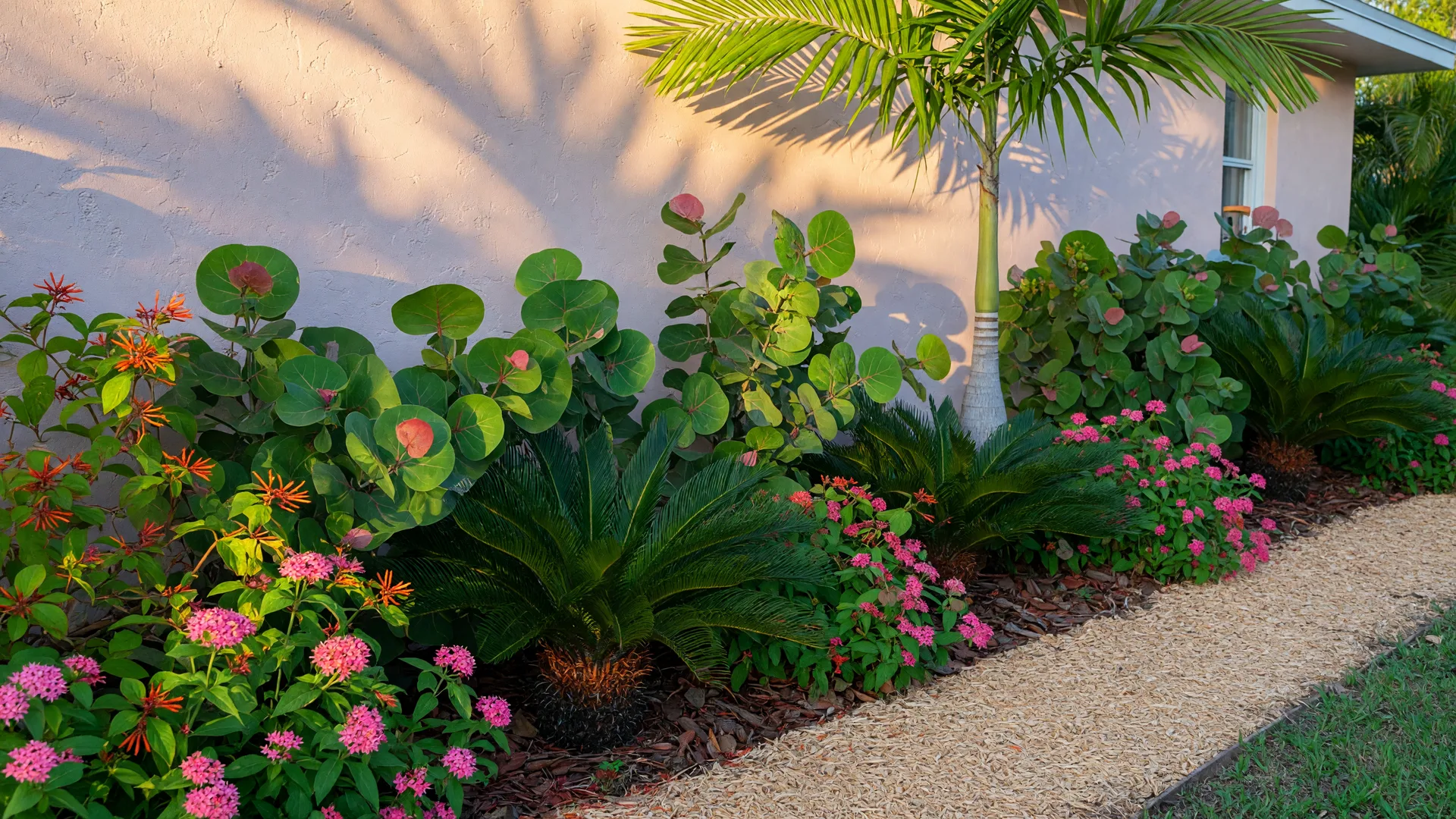
- Coontie (Zamia integrifolia): a slow-growing, low evergreen shrub that handles shade to part shade and hosts the atala hairstreak butterfly.
- Firebush (Hamelia patens): a sun-loving shrub with tubular orange-red flowers that draws hummingbirds and butterflies almost year-round.
- Cocoplum and sea grape: tough, salt- and wind-tolerant shrubs for hedges and coastal areas, with edible fruit that wildlife appreciates.
- Simpson's stopper and wild coffee: dependable understory shrubs with attractive foliage and berries, ideal for shaded beds under oaks.
- Beautyberry: a deciduous shrub with vivid purple berry clusters in fall that birds use heavily.
- Muhly grass: an ornamental bunch grass whose pink plumes appear in fall, handsome in borders and native to coastal Florida.
- Sabal palm (the state tree): a stately Florida palm that anchors a landscape and needs little once established.
- Trees: live oak, slash pine, and gumbo limbo are large native canopy options; check your lot size, HOA rules, and setback lines before planting any tree.
Sun exposure matters more than the shopping list. Firebush and muhly grass want full sun; coontie, wild coffee, and Simpson's stopper tolerate shade. Walk your yard at different times of day, note where the sun falls, and match each planting spot accordingly.
How Do You Build a Native Garden From a Blank Lawn?
Start small and plan a year ahead. Pick one bed near the house or along a path, remove the turf, amend the soil only if testing suggests you need it (most natives prefer the site's natural soil), and plant a small, well-chosen group rather than a scattered mix. Mulch the bed, water consistently through the first year, and let plants fill in before you expand.
Before you plant, run three quick checks that any Palm Beach County homeowner should do: review your HOA covenants or municipal landscaping rules for plant and turf requirements, call 811 before any digging for buried utility lines, and confirm local watering restrictions so your irrigation schedule matches the law. For lots with room to roam, larger native gardens fit naturally in places like Loxahatchee and The Acreage, where properties run to full acreage rather than postage-stamp lots.
To see mature natives before you commit, visit Mounts Botanical Garden in West Palm Beach and the county's UF/IFAS demonstration gardens, and talk to a local nursery such as SmartyPlants Nursery in Lake Worth Beach that specializes in native and Florida-friendly stock. Seeing a plant at maturity tells you far more than a photo ever will.
What Are the Most Common Mistakes New Native Gardeners Make?
A few patterns cause most of the disappointment in new native gardens, and they are easy to avoid once you know them:
- Planting in the wrong light. Sun-lovers like firebush and muhly grass sulk in shade, while shade-tolerant shrubs like wild coffee burn in full sun. Match the species to where it will live, not where you want it to live.
- Overwatering or underwatering in year one. New plantings need a regular schedule while establishing, but Florida natives that are kept consistently soggy can rot. Water deeply and less often, then taper as roots establish.
- Ignoring mature size. That 1-gallon shrub becomes a 10-foot hedge. Measure the mature spread and give every plant room, especially near windows, walkways, the roofline, and your driveway sight lines.
- Pruning into unnatural shapes. Natives look best when their natural form is kept. Heavy shearing stresses plants and invites pests. Prune for shape, size, and airflow sparingly, and at the right season for the species.
- Expecting instant establishment. Many natives spend their first year growing roots before they put on visible top growth. A quiet first year is normal, and the payoff comes after.
- Skipping the weed and invasive check. Clear aggressive weeds and non-native invaders from the bed before planting, and choose species that stay where you put them.
One more local note: parts of Palm Beach County have wetter microclimates, like low areas near canals, lakes, and drainage swales, and drier ones like high sandy ridges. Notice where water collects after a rain and plant accordingly, choosing species known to tolerate wet feet only in the low spots. If you are looking at homes on larger lots or near preserves, the Loxahatchee and The Acreage guide outlines how rural drainage and well systems work, which changes how you manage a landscape there.
How Does Native Landscaping Affect a Home Sale?
Landscaping influences curb appeal, and curb appeal influences how quickly buyers connect with a home. A neat, intentional yard with healthy plants reads as cared-for, while a neglected one raises questions regardless of what species are in it. Native and Florida-friendly plantings can be a genuine selling point: lower water bills, less upkeep, and a yard that shrugs off the heat are features many Palm Beach County buyers appreciate.
The key is that the garden reads as design rather than neglect. Keep beds edged, mulch fresh, and plants pruned to their natural form. If you are preparing a home for sale, I cover the full preparation sequence in my outdoor recreation guide for neighborhood context and in my seller resources on this site, and the cost of living guide helps buyers see what utility bills like water can look like here. Both are useful background whether you are planting now or selling soon.
If you are buying a home with an established landscape or selling one with a garden you built, I can help you evaluate what the yard adds to the property's story. Call me at (561) 236-9772 or email rtownsendrealestate@gmail.com, and let's talk about your Palm Beach County move.
Planning a Yard Refresh or a New Home?
Whether you are planting a native garden or thinking about what your landscaping says to buyers, I can help you think through the timing and the market. Call or email anytime.
Rhonda Townsend, REALTOR® · A.I. Certified Agent™ · 1st Real Estate Solution Inc.
(561) 236-9772 ·
rtownsendrealestate@gmail.com
Frequently Asked Questions
Sources
Sources referenced in this article:
- • UF/IFAS Florida-Friendly Landscaping Program — Water-Smart Landscape Planning and Plant Selection
- • Florida Native Plant Society — Native Plant Information and Chapter Activities
- • Mounts Botanical Garden of Palm Beach County — Public Garden, Classes, and Native Plant Collections
Disclaimer: This article is provided for general educational and real estate information only. It is not legal, tax, financial, insurance, environmental, engineering, or property-inspection advice. Real estate requirements, costs, risks, policies, and market conditions vary by property and may change. Consult qualified professionals regarding your individual circumstances.