Key Takeaways
- A room-by-room approach keeps downsizing manageable: sort one space at a time instead of trying to tackle the whole house at once.
- Use simple rules as you sort: would you buy this again today, and will it fit in the new floor plan?
- Start with storage rooms, closets, and garage spaces that you visit least, then work toward daily living areas.
- Palm Beach County offers free donation pickups, thrift store drop-offs, weekly bulk pickup for many households, and free drop-off of household chemicals.
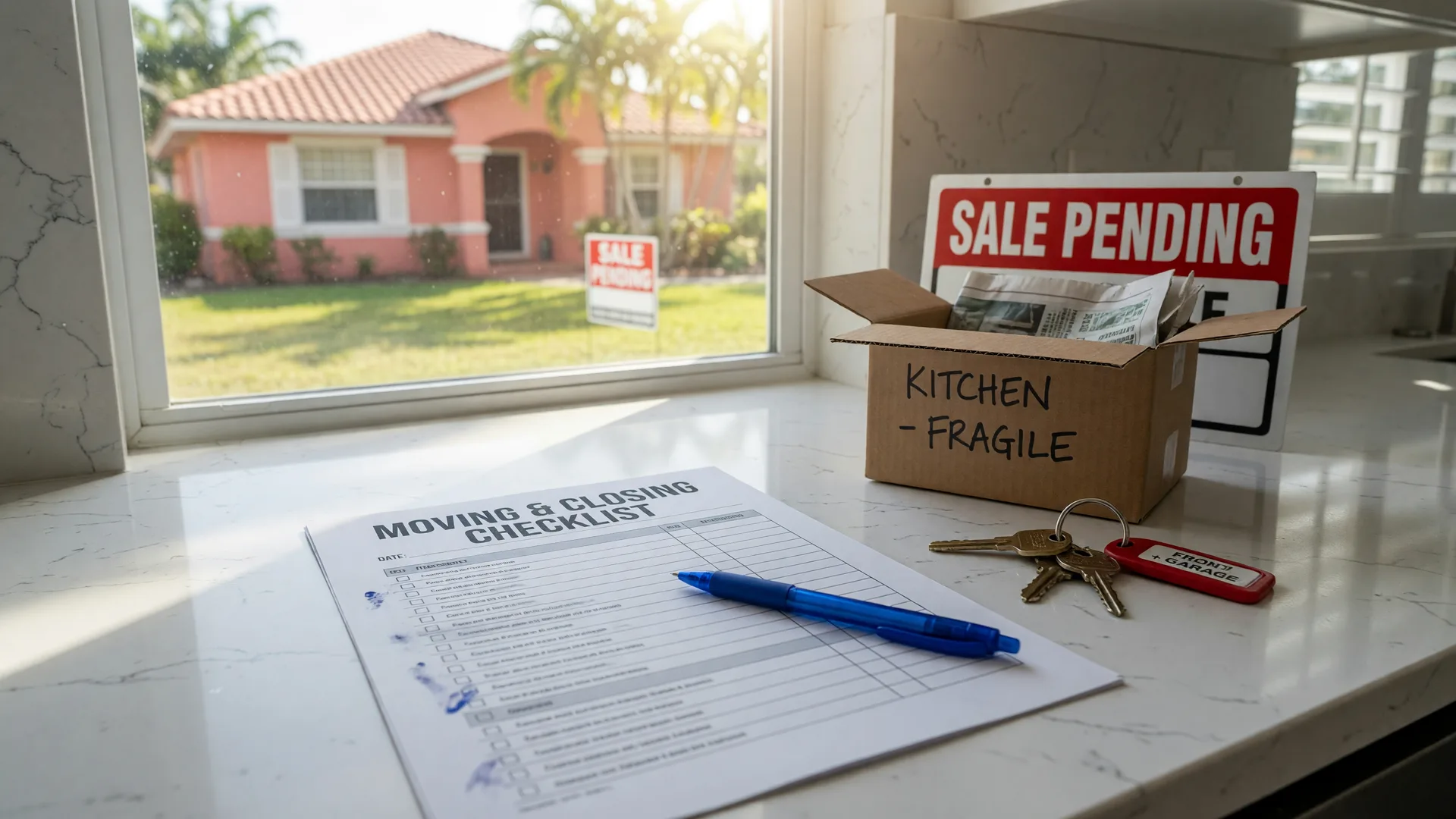
- Measure the new home before you decide what to keep, and line up moving help early so your timeline stays realistic.
Downsizing works best one room at a time. The goal of this checklist is to give you a clear order of operations so sorting a full home feels like a series of small decisions instead of one overwhelming task, and to show you exactly where your extra furniture, clothing, chemicals, and household goods can go in Palm Beach County.
I'm Rhonda Townsend with 1st Real Estate Solution Inc., and I have guided many Palm Beach County homeowners through downsizing and selling at the same time, from Wellington to West Palm Beach and Lake Clarke Shores. The clients who stay calm through the process are the ones with a system, so here is the room-by-room system I share with them.
Before You Start: Set Your Downsizing Rules
Decide your ground rules first and write them down. These three work for most people:
- Would I buy this again today? If the answer is no, it is a candidate for donation or sale.
- Does it fit the new floor plan? Measure the new rooms before you decide, and keep only what has a place.
- One-year rule for storage: If you have not used it in a year and it is not seasonal or sentimental, it probably should go.
Choose your donation and sale channels early, because knowing where things go makes every decision faster. For the overall strategy and timeline, my step-by-step downsizing plan pairs with this room-by-room guide.
Start With the Rooms You Use Least
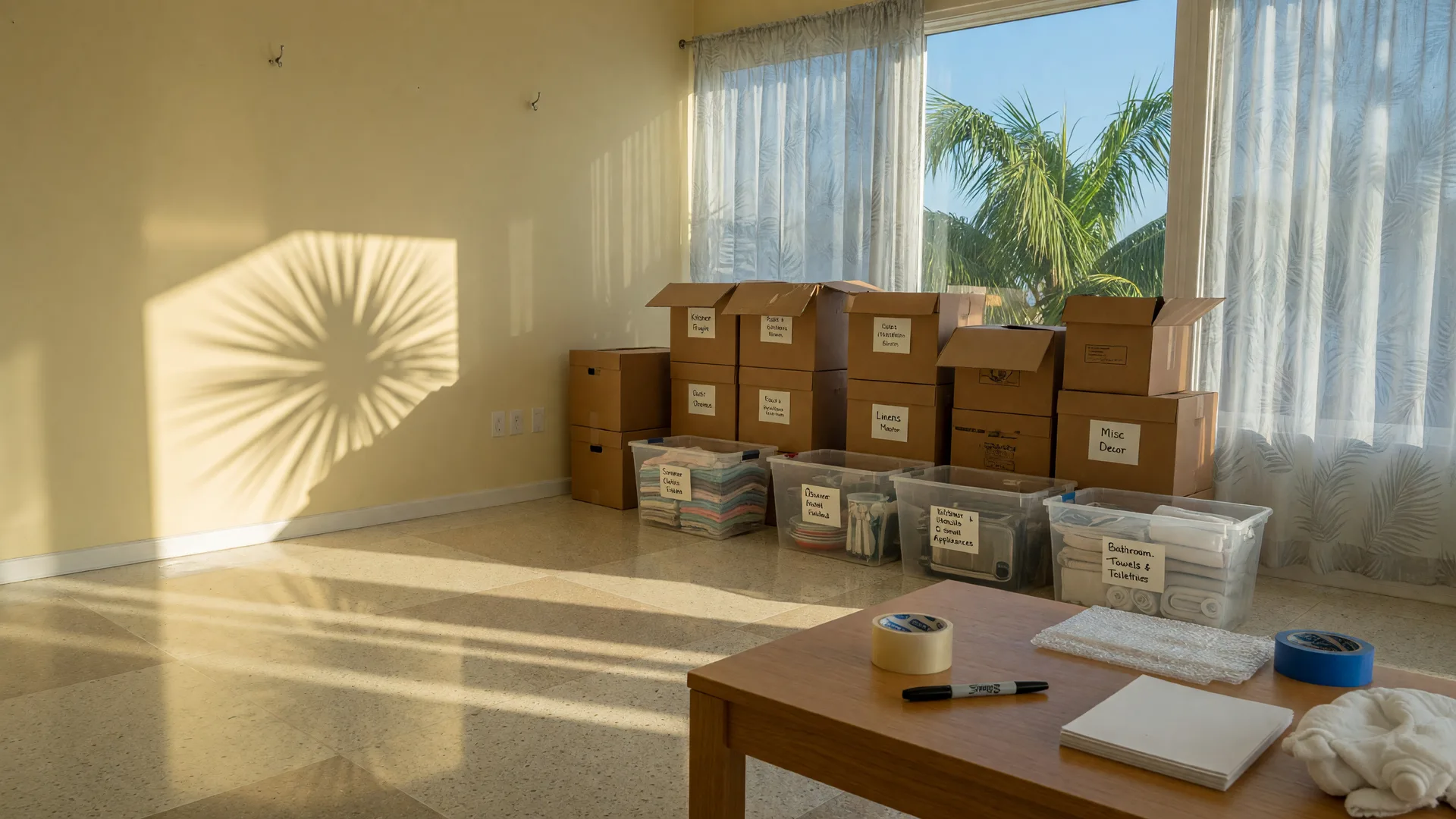
Begin in the garage, attic, storage closets, and guest rooms. These spaces are full of easy calls: old tools, boxes of cables, holiday decorations you no longer set up, and furniture nobody sits on. Sort every shelf into three piles: keep, donate or sell, and trash or recycle. Do the whole space in one sitting if you can, and label kept boxes clearly so the movers do not open them again.
Living Room and Dining Room
Furniture is the big decision here. Walk the likely new floor plan with a tape measure and keep only the pieces that fit comfortably. Then work through the room item by item: lamps, side tables, artwork, bookshelves, and decorative pieces. A smaller home usually needs one coffee table, not two, and one set of dining chairs that actually fit around the table. For furniture that will not transfer, take photos before you list it for sale, and contact donation pickups early because their schedules book up.
The Kitchen
Kitchens hide the most duplicates. Start with cabinets above the counters: rarely used mixers, extra baking pans, and mugs that outnumber the people who visit. Pull out drawers and keep one of each tool you actually use. Check the pantry and toss expired food, then donate unopened nonperishables to a food pantry if you have one nearby. Keep appliances only if they earned their counter space in the last year. Glassware and china that is not in rotation is a classic donation item.
Bedrooms and Closets
Sort closets by category: coats, shoes, work clothes, and drawers. For each item, ask whether you wore it in the last year and whether it fits your next lifestyle. Seasonal items stay, everything else goes. Then do linens: keep two sets per bed at most, and donate or repurpose the rest. Furniture such as dressers and nightstands gets the same measure-and-decide treatment as the living room. If a four-poster bed will not fit the new bedroom, act on it early.
Home Office and Paperwork
Paperwork deserves its own pass. Keep current-year tax documents, active insurance policies, titles, deeds, and anything you are legally required to hold, and follow the retention guidance of a tax professional for older records. Shred anything with account numbers you no longer need. Scan keepsakes and photos you want to preserve, then keep the originals in one labeled box. Donate working office chairs, desks, and shelving, and recycle electronics properly through the county household chemical and electronics drop-off program rather than the trash.
Bathrooms and Linen Closets
Bathrooms are fast and rewarding. Throw out expired medications (check for local pharmacy or police station take-back programs), old toiletries, and half-finished bottles you do not use. Keep one set of towels per person plus guests. A linen closet in a smaller home may not exist, so the towels that survive should be the good ones.
What to Do With What You Keep, Donate, Sell, or Haul
As the piles grow, route them into the right Palm Beach County channels:
- Donate. Goodwill and Salvation Army operate donation drop-offs across the county for clothing, housewares, and furniture in usable condition. The American Cancer Society donation pickup service schedules free pickups for furniture, clothing, and household goods in the area. Always confirm what each organization accepts before hauling items over.
- Sell. Quality furniture, tools, boats, and vehicles may be worth selling online or through a consignment or estate sale company. Compare the time and effort against the expected price, and remember that unsold items still need a removal date.
- Haul and dispose. The Solid Waste Authority of Palm Beach County provides weekly bulk pickup of large items for many households (limits and schedules apply depending on whether you are in a municipality), plus transfer stations where you can self-haul larger loads. Paint, batteries, cleaners, fuels, and many electronics belong at a free Home Chemical and Recycling Center, never in the regular trash.
Plan the Move Before You Sort
Book your movers as soon as you have a closing date, because moving companies fill up fast at the end and beginning of months. Confirm what your new home and community allow: some condos and villas restrict move-in dates, elevator use, and parking for moving trucks. If your next home is a condo or villa, my condo and villa comparison and the downsizing resources page on this site cover what to review before you commit, and the moving checklist walks through the eight-week move timeline.
If you are in Wellington, West Palm Beach, Lake Clarke Shores, or another Palm Beach County community and thinking about a smaller home, I would be glad to help you line up the sale while you sort. Call me at (561) 236-9772 or email rtownsendrealestate@gmail.com, and we can build a timeline that does not rush you.
Downsizing and Ready for the Next Chapter?
I help Palm Beach County homeowners find the right size home and coordinate the transition from listing to closing, with plenty of patience and a clear plan. Tell me where you are starting from.
Rhonda Townsend, REALTOR® · A.I. Certified Agent™ · 1st Real Estate Solution Inc.
(561) 236-9772 ·
rtownsendrealestate@gmail.com
Frequently Asked Questions
Sources
Sources referenced in this article:
- • Solid Waste Authority of Palm Beach County — Bulk Pickup, Transfer Stations, and Household Chemical Drop-Off
- • American Cancer Society Donation Pickup — Free Furniture and Clothing Pickup
- • Florida Realtors — Florida Realtors
Disclaimer: This article is provided for general educational and real estate information only. It is not legal, tax, financial, insurance, environmental, engineering, or property-inspection advice. Real estate requirements, costs, risks, policies, and market conditions vary by property and may change. Consult qualified professionals regarding your individual circumstances.